Tuesday, 16 September 2025

Major car changes in India in my lifetime

1991: Power windows in the Tata Sierra

1994: Front seat belts made mandatory for new cars

1998: Hyundai Santro launched in India with a factory-fitted AC in the base variant

2002: Power steering introduced in Maruti Alto line-up

2014: Maruti launches automatic transmission (without discontinuing the feature) in the Celerio

2017: Mandatory airbag for the driver for new cars

2021: Mandatory front seat side passenger airbag for new cars

2021: MG Astor launched in India with level 2 ADAS


Monday, 26 February 2024

My favourite teachers

My mother, for teaching me the letters and inculcating in me the idea that studying is important.

Bengali
  • Susanta Das Chowdhury, in class 4. He was the music teacher but he taught us Bengali for a year. He was much better than all the other Bengali teachers I had throughout school. He was the only teacher who emphasised on the difference between shadhu Bangla and cholit Bangla.
  • Asim Chakraborty. I took private lessons from him in classes 9 and 10. He used to stay in Kalindi behind Lake Town. He used to be a former teacher of history and Bengali in my school but he retired much before I was in middle school, He greatly improved my Bengali spellings, and also helped me reinforce my ideas about atheism.

English
  • Mr. Sengupta, in middle school. He did not teach either English language or English literature. Rather the period was called 'Spelling and Dictation'. What happened in those classes were games with English letters and words.
  • Stephen D'Souza, throughout middle school. Taught me English grammar.
  • Peter Sidney, in classes 9 and 10. Used to do a really detailed study of Merchant of Venice.
  • Sujata Goswami, in classes 11 and 12. Improved my grammar.
  • Amlan Das Gupta, at university. For focussing on the smaller picture while dealing with a text.
  • Supriya Chaudhuri, at university. For focussing on the larger picture while dealing with a text.
  • Paromita Chakravarti, at university. For teaching me about feminism.
  • Sukanta Chaudhuri, at university, For keeping texts simple and focussing on the central tenets of a text rather than its long history of criticism.

Physics
  • Shampali Mukherjee. She taught us science in middle school and physics in classes 9 and 10. After that, she was no longer our teacher, and my marks in physics reduced from the 90s to the 10s before recovering to the 60s. It is not as if I was fascinated by physics and I wanted to explore the subject further but that is perhaps because of my own disinclinations.

Chemistry
  • Mr. Pakrasi. He taught us chemistry in classes 9 and 10. We were also introduced to the chemistry lab in class 9. The idea of liquids changing into other colours seemed fascinating at that age. In classes 11 and 12, he was no longer our teacher, and chemistry lab remained associated with the smell of H2S in my memory after that.
  • Bijoy Sir. A private chemistry teacher I went to in classes 11 and 12. He stayed in Salt Lake, looked quite old and had spent some time in the USA earlier. He at least kept my interest in chemistry from flagging to drastic levels and had a simple method for teaching. Just as I was not fascinated by physics, my interest in chemistry drooped soon after but then again, it was perhaps because of my own disinclinations.

Computer Science
  • My elder brother. He bought a computer after completing class 10 and when I was in class 7. Before class 10, he had written a 200-page computer programme of the board game Battleship that we had at home. This was for a school assignment when his classmates were writing 10-15 page computer programmes. He was a boy genius at computers. Some of it rubbed off on me and I had created my first HTML website within six months of getting an internet connection at home. It wasn't surprising that he decided to study computer science as an undergraduate.
  • Shampa Ghosh. I went to her for private tuitions in classes 11 and 12. Primarily because my school teacher was an explicitly corrupt person. She not only made computer science fun and interesting for me but her son taught me Scrabble and I finished runners-up in the only two Scrabble competitions I have ever participated in (the winner was her son). She taught at Calcutta Girls’ High School, stayed in Chakraberia near Minto Park and also near Seven Tanks in Cossipore.
I initially wanted to study computer science after school just like my elder brother. But my grasp on physics and mathematics was not strong enough to get through to good institutions. Good teachers and good classmates are as important for sustaining interest in a subject as any other factor. I had learnt that from my experience at school. So I bunked the idea of computer science and decided to study English literature instead.

Given the number of English teachers from school who feature in this list, I guess it isn't surprising that I had more role models in English than in any other subject.

Friday, 19 January 2024

Most loved 100 English poems in the UK in 1995

 In 1995, the BBC's television programme 'Bookworm' conducted a poll to find out the most loved poems in the UK. The results were as follows.


1 If -, Rudyard Kipling; 1865-1936

2 The Lady of Shalott, Alfred, Lord Tennyson; 1809-92

3 The Listeners, Walter de la Mare; 1873-1956

4 Not Waving but Drowning, Stevie Smith; 1903-1971

5 I Wandered Lonely as a Cloud, William Wordsworth; 1770-1850

6 To Autumn, John Keats; 1795-1821

7 The Lake Isle of Innisfree, W.B. Yeats; 1865-1939

8 Dulce et Decorum Est, Wilfred Owen; 1893-1918

9 Ode to a Nightingale, John Keats; 1795-1821

10 Aedh: He Wishes for the Cloths of Heaven, W.B. Yeats; 1865-1939

11 Remember, Christina Rossetti; 1830-94

12 Elegy Written in a Country Churchyard, Thomas Gray; 1716-71

13 Fern Hill, Dylan Thomas; 1914-53

14 Leisure, William Henry Davies; 1871-1940

15 The Highwayman, Alfred Noyes; 1880-1959

16 To His Coy Mistress, Andrew Marvell; 1621-78

17 Dover Beach, Matthew Arnold; 1822-88

18 The Tyger, William Blake; 1757-1827

19 Twelve Songs: IX ('Stop all the clocks'), W.H. Auden; 1907-73

20 Adlestrop (the place), Edward Thomas; 1878-1917

21 The Soldier, Rupert Brooke; 1887-1915

22 Warning, Jenny Joseph; 1932-

23 Sea-Fever, John Masefield; 1878-1967

24 Composed upon Westminster Bridge, September 3, 1802, William Wordsworth; 1770-1850

25 Sonnets from the Portuguese XLIII, Elizabeth Barrett Browning; 1806-61

26 The Love Song of J. Alfred Prufrock, T.S. Eliot; 1885-1965

27 Cargoes, John Masefield; 1878-1967

28 Jabberwocky, Lewis Carroll; 1832-98

29 The Rime of the Ancient Mariner, Samuel Taylor Coleridge; 1772-1834

30 Ozymandias, Percy Bysshe Shelley; 1792-1822

31 Stopping by Woods on a Snowy Evening, Robert Frost; 1874-1963

32 Abou Ben Adhem, Leigh Hunt; 1784-1859

33 Everyone Sang, Siegfried Sassoon; 1886-1967

34 The Windhover, Gerard Manley Hopkins; 1844-89

35 Do Not Go Gentle into That Good Night, Dylan Thomas; 1914-53

36 Sonnet 18, 'Shall I compare thee to a summer's day?', William Shakespeare; 1564-1616

37 When You Are Old, W.B. Yeats; 1865-1939

38 Naming of Parts, Henry Reed; 1914-86

39 The Darkling Thrush, Thomas Hardy; 1840-1928

40 Please Mrs Butler, Allan Ahlberg; 1938-

41 Kubla Khan, Samuel Taylor Coleridge; 1772-1834

42 Home-Thoughts, from Abroad, Robert Browning; 1812-89

43 High Flight (An Airman’s Ecstasy), John Gillespie Magee; 1922-41

44 Journey of the Magi, T.S. Eliot; 1885-1965

45 The Owl and the Pussy-Cat, Edward Lear; 1812-88

46 The Glory of the Garden, Rudyard Kipling; 1865-1936

47 The Road Not Taken, Robert Frost; 1874-1963

48 The Way through the Woods, Rudyard Kipling; 1865-1936

49 Anthem for Doomed Youth, Wilfred Owen; 1893-1918

50 Bloody Men, Wendy Cope; 1945-

51 Emmonsail’s Heath in Winter, John Clare; 1793-1864

52 La Figlia Che Piange, T.S. Eliot; 1885-1965

53 The Whitsun Weddings, Philip Larkin; 1922-80

54 The Ballad of Reading Gaol, Oscar Wilde; 1854-1900

55 I Remember, I Remember, Thomas Hood; 1799-1845

56 This Be the Verse, Philip Larkin; 1922-80

57 Snake, D.H. Lawrence; 1885-1930

58 The Great Lover, Rupert Brooke; 1887-1915

59 A Red, Red Rose, Robert Burns; 1759-1796

60 The Sunlight on the Garden, Louis MacNeice; 1907-63

61 The Old Vicarage, Grantchester, Rupert Brooke; 1887-1915

62 Diary of a Church Mouse, John Betjeman; 1906-84

63 Silver, Walter de la Mare; 1873-1956

64 Pied Beauty, Gerard Manley Hopkins; 1844-89

65 Prayer before Birth, Louis MacNeice; 1907-63

66 Macavity: The Mystery Cat, T.S. Eliot; 1885-1965

67 Afterwards, Thomas Hardy; 1840-1928

68 The Donkey, G.K. Chesterton; 1874-1936

69 My Last Duchess, Robert Browning; 1812-89

70 Christmas, John Betjeman; 1906-84

71 The Thought-Fox, Ted Hughes; 1930-98

72 Preludes, T.S. Eliot; 1885-1965

73 Love (III), George Herbert; 1593-1633

74 The Charge of the Light Brigade, Alfred, Lord Tennyson; 1809-92

75 I Am, John Clare; 1793-1864

76 The Hound of Heaven, Francis Thompson; 1859-1907

77 The Passionate Shepherd to his Love, Christopher Marlowe; 1564-93

78 The Song of Wandering Aengus, W.B. Yeats; 1865-1939

79 She Walks in Beauty, George Gordon, Lord Byron; 1788-1824

80 Loveliest of Trees, the Cherry Now, A.E. Housman; 1859-1936

81 The Flea, John Donne; 1572-1631

82 Ducks, F.W. Harvey; 1888-1957

83 An Arundel Tomb, Philip Larkin; 1922-80

84 Sonnet 116, 'Let me not to the marriage of true minds', William Shakespeare; 1564-1616

85 Ulysses, Alfred, Lord Tennyson; 1809-92

86 Snow, Louis MacNeice; 1907-63

87 Let Me Die a Youngman’s Death, Roger McGough; 1937-

88 The Ruined Maid, Thomas Hardy; 1840-1928

89 Toilet, Hugo Williams; 1942-

90 Futility, Wilfred Owen; 1893-1918

91 The Raven, Edgar Allan Poe; 1809-49

92 Tam o’ Shanter, Robert Burns; 1759-1796

93 Love’s Philosophy, Percy Bysshe Shelley; 1792-1822

94 The Song of Hiawatha, H.W. Longfellow; 1807-82

95 God’s Grandeur, Gerard Manley Hopkins; 1844-89

96 Chocolate Cake, Michael Rosen; 1954-

97 Jenny Kissed Me, Leigh Hunt; 1784-1859

98 Blackberry-Picking, Seamus Heaney; 1939-2013

99 The Prelude, William Wordsworth; 1770-1850

100 Warming Her Pearls, Carol Ann Duffy; 1955-

Wednesday, 28 June 2023

Writers and self-promotion

 Daphne du Maurier supposedly said 'Writers should be read, but neither seen nor heard'.


Tom Rachman, 'On the Pitfalls of Book Promotion in the Internet Age,' LitHub, 26 June 2023, https://lithub.com/on-the-pitfalls-of-book-promotion-in-the-internet-age/

Monday, 24 April 2023

My favourite Western Classical composers

  • Bach
  • Vivaldi
  • Mozart
  • Beethoven
  • Chopin
  • Tchaikovsky
  • Yiruma

Saturday, 29 October 2022

Comics strips I read regularly

In The Telegraph, Kolkata:


  • Ziggy (in the Tom Wilson II era)


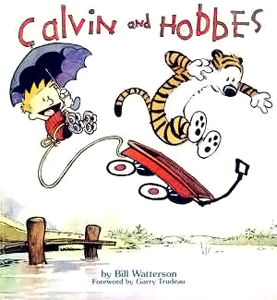
  • I read all Calvin and Hobbes (by Bill Watterson) chronologically through a set of illegally obtained digital images I acquired way back in 2005. The strip was published from 1985 to 1995, a much smaller run than the other ones, so one can actually read all of it over a small period of time. It is a pity that  I read Calvin and Hobbes through piracy given that Watterson went at great lengths to prevent greater commercialisation of his work. Sad and ironic. 


  • Either The Statesman, Kolkata or The Telegraph used to publish Beetle Bailey at one point of time. I remember reading that regularly as well.

  • I never read Henry in English as neither The Statesman  nor The Telegraph carried it when I read them but I read a Bengali translation of it called Gablu/ গাবলু which used to be published in Anandamela/ আনন্দমেলা. Wikipedia says that now it is no longer syndicated.


Monday, 14 February 2022

Political issues

 The issues which I believe are most important in India today (in decreasing order of priority) are:

  1. Increasing communal harmony
  2. Decreasing income inequality
  3. Reducing unemployment
  4. Improving access to health facilities
  5. Improving quality of education
  6. Reducing corruption in politics
  7. Ecological sustainability
  8. Improving caste, gender, sexual orientation equality

Wednesday, 5 January 2022

Fun with mathematics

a) Think of a whole number between 1 and 10.

b) Double it.

c) Add 4 to your result.

d) Divide the result by 2.

e) From this result, subtract the initial number you had thought of.

f) Your result is 2.


Another exercise


a) Think of a whole number between 1 and 10.

b) Multiply it by 3.

c) Add 30 to your result.

d) Multiply this result by 2.

e) Divide the entire result by 3.

f) Subtract 10 from your result.

g) Divide this result by 2.

h) From this result, subtract the initial number you had thought of.

i) Your result is 5.

Consecutive squaring

My computer can keep on squaring 2 only 6 times, at which point of time it gives the result 1,84,46,74,40,73,70,95,51,616. It cannot give an accurate result for the square of this number.

Exponential growth

 My computer's calculator can calculate 2 to the power 106 (or 2^106) accurately. Which is 8,11,29,63,84,14,60,66,81,69,57,89,00,51,44,064. It cannot multiply this figure by 2 properly.

Saturday, 4 September 2021

In the Dark Night of the Soul it's Always 3:30 in the Morning

One of the TV shows I have enjoyed watching in the last two years has been The Morning Show on Apple TV+. The first episode was titled 'In the Dark Night of the Soul it's Always 3:30 in the Morning'. I had assumed, that it was a title made up entirely by the creators of the show. But I was mistaken. It is inspired from an autobiographical essay by F. Scott Fitzgerald titled 'The Crack-Up' (Esquire, 1936) where Fitzgerald writes:

Now the standard cure for one who is sunk is to consider those in actual destitution or physical suffering—this is an all-weather beatitude for gloom in general and fairly salutary daytime advice for everyone. But at three o'clock in the morning, a forgotten package has the same tragic importance as a death sentence, and the cure doesn't work—and in a real dark night of the soul it is always three o'clock in the morning, day after day. At that hour the tendency is to refuse to face things as long as possible by retiring into an infantile dream—but one is continually startled out of this by various contacts with the world. One meets these occasions as quickly and carelessly as possible and retires once more back into the dream, hoping that things will adjust themselves by some great material or spiritual bonanza. But as the withdrawal persists there is less and less chance of the bonanza—one is not waiting for the fade-out of a single sorrow, but rather being an unwilling witness of an execution, the disintegration of one's own personality…

Saturday, 19 June 2021

Traveller’s guide to Kolkata

You find yourself for the first time in Kolkata. You have only a short period of time here apart from doing what you came here to do in the first place. What should you see? Where should you eat? What should you eat? What should you buy? Where should you buy it from? I am here to answer all these questions.
 
Places to see
 
1. If you are a museum-kind of person, you have two options—the Indian Museum and Victoria Memorial. Both are situated close by. On a pleasant day you can walk from one to the other. But pleasant days are far and few in Kolkata. So you may take a cab given your scarcity for time. The Indian Museum is open from 10 am to 5 pm Tuesday to Sunday and the Victoria Memorial 11 am to 6 pm also from Tuesday to Sunday. The Indian Museum’s focus is on Indian history rather than Kolkata history. You will find ancient Buddhist sculptures, ancient Greco-Indian coins and Mughal and Rajput miniature paintings. You will also find paintings of early 20th century Bengali painters such as Nandalal Bose, Abanindranath Tagore and Gaganendranath Tagore. The Victoria Memorial Hall’s focus is on the colonial history of Kolkata. So you will find paintings from 18th and 19th century Kolkata primarily. There are also paintings of Nandalal Bose, Abanindranath Tagore and Gaganendranath Tagore at the Victoria Memorial.
If you have time to choose only one, let me put forward the pros and cons of both. The Victoria Memorial Hall’s architecture is itself colonial and regal. If you have seen enough of it elsewhere, you may go to the Indian Museum for the greater number of things to see over there. If you want to experience the colonial architecture, choose the Victoria Memorial.
 
2. You must go to Prinsep Ghat on the Strand Road and take a boat ride for 30 minutes before it is dark but not when it is too sunny. Choose the time depending on the weather.
 
3. If you have enough time and the weather is suitable, you may want to go on one of the Kolkata walking tours organised by some travel companies. Do an internet search and you will get some results.
 

Places to eat

1. Where can you get good Bengali food restaurant quality in Kolkata? Choose either a restaurant named 6 Ballygunge Place located at that address or choose Oh Calcutta in Forum Mall or any of its other outlets. The food at Oh Calcutta is better but being situated in a mall the ambience is nothing to write home about. 6 Ballygunge Place is not bad food taste wise but not as good as Oh Calcutta. The building at 6 Ballygunge Place is nice to see though. I would go to Oh Calcutta at Forum Mall. By the way, there is a garments shop called Fabindia at Forum Mall. If you are looking to buy Indian kurta pyjama or women’s salwar kameez, it is convenient though you may wonder whether you would ever wear such clothes outside India if you are from outside India. If you are from other Indian cities, go to 6 Ballygunge Place. One Indian mall is like any other Indian mall. Nothing special to see in any mall.
What to eat at these restaurants: Try luchi or puffed bread, try chhana motorshutir chop or cottage cheese fried balls, try bhetki paturi or mustard and fish steamed inside a banana leaf, try bhapa ilish boneless or hilsa fish without bones, try khejur amshotto chutney or a sweet liquidy dessert, try chaaler payesh or a liquidy rice dessert.
 
2. Bengali desserts: There is a concept in India called mishtir dokaan or mithai shop or sweet shop. Bengal comes with its own specialities. The famous ones are Banchharam, Gupta Brothers, Haldiram, Kamdhenu, KC Gope, Balaram Mullick. Locate one of these or any other one and eat a few, whatever takes your fancy. If you are in Kolkata in winter, remember to have at least one sweet made with nolen gur.  There is something called the Mishti Hub in New Town near the airport where there are several of these shops located one next to the other. You won’t be able to eat much before boarding your plane nor would you want to waste too much time there before boarding your plane but if you think you want to pick up something in a hurry before you go to the airport, you may want to stop there. Otherwise, while you have the time on the earlier days, drop by into a Bengali sweet shop or mishtir dokaan.
 
3. Fruits: If you are in Kolkata in summer, have Himsagar mango or some other mango, jackfruit which is known locally as kathal and other fruits which you have not had before. In case your hotel does not have anything you have never had before, go to a Kolkata bazaar and buy fruits for yourself and ask the hotel staff to peel it for you and give it to you.
 
4. Street food: Have a chicken roll, have phuchka, have jhaal muri, have beguni, have alur chop. Food is unlikely to make you sick if you ask everyone to not put chillies in them. Have bottled water though. Safer for the traveller. It is available widely. Ask your hotel staff. They will tell you where to find these.

5. Have the Kolkata chicken biryani with potato. Ask at your hotel. If they do not make it, they may suggest a nearby place.
 

Places to buy
 
1. There are these Biswa Bangla government-run stores targeted at the rich traveller. If you fit into that category, you can pop into these stores. They are there on Park Street, at Dakshinapan in South Kolkata, at New Town, at Salt Lake City Centre and at the airport. They have an assorted collection of things. If you happen to go to Dakshinapan in South Kolkata, you will find a host of other handicrafts to buy if you like such stuff. Fancy buying a Bengali script watch? The Tata-owned company Titan has a set—(for men/ wider) https://www.titan.co.in/product/titan-mother-of-pearl-dial-analog-watch-for-men-1740sl02 and (for women/ narrower) https://www.titan.co.in/product/titan-mother-of-pearl-dial-analog-watch-for-women-2580wl01 (I am not earning anything through this referral. I am not earning anything from any of the shops mentioned earlier either). 

Thursday, 27 May 2021

Nature in Kolkata

 Nature in Kolkata


Tightly-packed buildings one after the other, with very few roads in between and even fewer open spaces and water bodies is one way of describing Kolkata in 2021. The hot scorching sun throughout most of the working hours before sunset makes people stay indoors if they can afford to. The central business district is chock-a-block with people though, as are the various residential slums where a large section of the residents live. It takes exceptional circumstances to not hear the sound of motorised vehicles throughout the day. Amid this, where does one find nature or the aesthetically pleasant aspects of it?

Smoke covered stars from the skyline of the city several decades back. Cumulus clouds against a blue background, as in a John Constable painting, are visible sometimes after the rains have stopped, taking away the harshness of the sun. If one passes by the East Kolkata wetlands on such a morning or afternoon, the greenery and lack of buildings in the horizon may lull you into an idyllic mood. The small hillock of garbage resembles a natural hill from afar. The Maidan presents a welcome break but it was created by clearing away the trees to practice firing the cannons. The greenscape of the land has a few trees but it leaves much to be desired by way of nature. Rabindra Sarobar, another man-made landscape in south Kolkata has water, trees and birds. Central Park, in Salt Lake, has its own share of such elements as has Eco Park in New Town. Curated landscape of this sort has its own charms, especially if one is not spoilt for choices.

Another way of grasping nature is by acknowledging the relief that pre-monsoon storms and the monsoon brings after the scorching heat of the summer. The relief turns into misery for the homeless and those in living in fragile quarters, which, considering the significant slum population of the city is considerable. Those ensconced behind glass windows may look at the rain with a smile on their lips and a sense of calm on the skin of their bodies if they do not mind being indoors. With the heat and the dust settling down, the landscape takes on a mellow look. The leaves shine bright, the barks of the trees glow and the roads do not stare back at you. Even before the rains begin, the sky with its grey clouds presents a pretty picture. The grey clouds look like juicy fruits, about to burst open and shower sweet drops of mercy on the city beneath. They present the same sense of expectation and relief as the idea of a cool shower after a hot, sweaty, grimy day.

Birds, those warbling creatures of delight, are a disappearing species in the city. Whereas the crow and the pigeon reign supreme, and the myna and the small crane are still thankfully found aplenty, lots of other species are a rarity. The koel is more often heard than seen but its voice is reassuring enough to the human residents that this avian neighbour of theirs still exists. It is rare to sight a blue and orange kingfisher or a black-headed oriole but sighting them seems like a feat in itself, a moment of delight and of joy at the wonders of nature. Sparrows, those little bundles of energy, are no longer common.

Dogs, cats, cows, buffaloes, horses, squirrels, rats and mice are common sights. Dogs and cats are domesticated pets and we have a different kind of relationship to these animals. Squirrels, on the other hand, present the wildness and swiftness of nature that we still prize.

Trees in the city are not allowed to grow to their fullest extent. The tree in Ritwik Ghatak’s Meghe Dhaka Tara would not be found in Kolkata anymore. Horizontal branches are trimmed regularly to make the tree fit for a crowded city. Such trimming is rarely proportional. As a result, the trees grow lopsided and fall over when pushed by strong winds. Leafy trees abound. Fruit trees in people’s personal compounds are a rarity. Kerala, for instance, has recently brought out a rule urging people to plant mango or jackfruit trees in their houses. Kolkata is yet to entice people to bear such fruits. Vegetable gardens are also not particularly common owing to the lack of gardens in the compounds of most buildings. A city bursting with people barely manages to push together people inside its limits. Trees in such spaces are a luxury. It is not as if one will not see the odd guava, mango, papaya, coconut, banana or jackfruit tree or tomato or chilli plants in building compounds but such compounds are the exception rather than the norm. 


Sunday, 18 April 2021

পৃথিবীর জনসংখ্যা

পৃথিবীর জনসংখ্যা সব চেয়ে বৃদ্ধি পেয়েছিলো ১৮০০ থেকে ১৯৭০ সাল পর্যন্ত। এই ১৭০ বছরের পরিবেশের ক্ষতি মেটাতে কত বছর লাগবে?

Monday, 22 March 2021

Playing around with Twitter API

author_id 1 to 11 do not exist any further. author_id 12 is @jack

tweet id 1 to 19 do not exist any further. tweet id 20 is this

Friday, 12 June 2020

Encouraging domestic companies in the digital space

If a nation were to try and be self-sufficient in the digital space, where are the chances of success higher? It is a different issue that a 100% domestically owned company is rare the bigger a company gets. So, achieving self-sufficiency without diluting domestic ownership is not common.

Internet companies can be divided into the following categories:

1. User-generated content
Examples include social networks and social clouds, such as Whatsapp, Facebook, Instagram, TikTok, Twitter, YouTube.

There is a first mover advantage here. If your associates are not on a platform, there is little incentive for you to join that platform. It is not too wise to replicate existing leading platforms and hope to poach their users. A newer kind of platform is the best bet. Facebook offered something different than Orkut. Instagram offered a different kind of experience from Flickr and Picasa. TikTok offers a different kind of platform from Facebook, Instagram or YouTube.

2. E-commerce
This offers a good chance for domestic start-ups. Along with fast delivery and good customer support, if a platform offers cheaper products, users will abandon older platforms and move over to the newer one. Cheapest service usually wins.

3. E-wallets
There is a first mover advantage but being the cheapest trumps that. Whoever offers the cheapest service wins. India has the BHIM UPI app. But it has far lesser users compared to Google Pay, PhonePe and Paytm UPI because those companies offered more freebies and were hence cheaper.

4. Content library
Streaming sites, be they music, movies, educational videos. Quantity, quality and price of the content are the three factors. For music, quality is similar everywhere. What matters is quantity and pricing. For movies, quality and pricing since the content is usually mutually exclusive. For educational videos, quality and pricing are the two most important issues. This segment is likely to always remain a multi-player field.

5. Aggregators of offline services
The online aggregator needs to offer availability of services, good customer support and cheap pricing. It is similar to e-commerce. Brand loyalty is less. Cheapest service for the end-user wins as long as the price suits the offline service provider.

6. Pure internet services
Usability and features along with pricing wins. Think of video conferencing services. Better features wins. First mover advantage is not very prominent.

Wednesday, 13 May 2020

My favourite academic books

Monographs, not compilation of essays or stand-alone articles. In no particular order. I shall keep adding to this list as I remember more works which have stayed with me.

When an academic is also a fiction writer or a poet, the book is often very readable if one knows enough about the subject being discussed. C.S. Lewis’s The Allegory of Love has several sentences which made me appreciate his writing style. Alas, I do not know enough French to complete the book.

1. Keith Thomas, Man and the Natural World: Changing Attitudes in England 1500–1800 (1983)

2. Erica Fudge, Brutal Reasoning: Animals, Rationality, and Humanity in Early Modern England (2006)

3. Penguin Monarchs series

4. Edward Said, Orientalism (1978)

5. Quentin Skinner, The Foundations of Modern Political Thought  (1978)

6. Philippe Ariès, The Hour of our Death. Translated by Helen Weaver. Originally published as L’homme devant la mort (1977)

7. Wallace K. Ferguson, The Renaissance in Historical Thought (1948)

8. David Perkins, Romanticism and Animal Rights (2003)

9. Sharmistha Gooptu, Bengali Cinema: An Other Nation (2010)

Wednesday, 22 April 2020

Let them speak

Let them speak
words which mean nothing.
Is it only they who can speak?

Let them post
lies of many hues.
Can they match my jasmine’s white streak?

Let them shout
space away from us.
Won’t the gadfly make the horse weak?

Let them jail
Our bodies and rights.
Can they cover up the sun all week?

Their billboards
engulf our shadows.
At noon, no eyes move up to peek.

Fear the meek
new invincibles.
It is your downfall which we seek.

Saturday, 7 December 2019

A few facts about Popes


  • The first Pope or Papa, St. Peter, was born in West Asia. He died in Rome, leading to the shift of Christianity to Rome.
  • The next Pope, Linus, was born in the region now known as Italy. Most Popes since then have been of Italian origin.
  • The third Pope, Anacletus, was the first Greek Pope. Most of the early Popes were either of Italian or Greek or West Asian origin.
  • The 14th Pope, Victor I, was the first African Pope and was a Berber born in the region now known as Libya. He, however, was not the first Pope from the Southern Hemisphere. That distinction belongs to Francis who became Pope in 2013.
  • In 217 CE, the tradition of having two claimants to the title of Pope started. Such disputes continued on and off till the accession of Nicholas V in 1447 CE.
  • Boniface II, who became Papa in 530, was the first Germanic Pope.
  • Gregory III, who became Pope in 731, was born in West Asia, and was the last non-European Pope before Francis in 2013.
  • Leo III, crowned Charlemagne Holy Roman Emperor on Christmas Day 800 CE. It established the office of the Holy Roman Emperor and also the tradition of the Holy Roman Emperor having to seek the sanction of the Pope for his legitimacy. This dual power centre set off further skirmishes later on.
  • John VIII, who became Papa in 872, was the first Pope who was assassinated.
  • Sylvester II, who became Pope in 999, was the first French/ Occitan Papa. After Gregory XI, who became Pope in 1370, there has not yet been any other French Pope.
  • Adrian IV, in 1154, became the first and till date the only English Pope.
  • John XXI, in 1276, became the first Portuguese Pope.
  • Benedict XIII, who was a claimant to the title of Pope, became the first Spanish claimant in 1394. After the end of the Western Schism, Callixtus III, who was a Borja, became the universally acknowledged Pope in 1455.
  • Alexander VI, a Borja, was the last non-Italian (Spanish) Pope before John Paul II in 1978, who became the first Polish Pope.
  • Leo X, in 1513, became the Pope. He was the son of Lorenzo de' Medici.
  • Adrian VI, in 1522, became the only Dutch Pope.
  • The next Pope, Clement VII, was also a Medici, and forbade the divorce of Henry VIII of England.
  • Francis, in 2013, became the first Pope from the Americas and the first from the Southern Hemisphere.

In addition, whenever I think of Popes, I am reminded of two poems by Robert Browning,'The Bishop Orders His Tomb at Saint Praxed's Church' and 'Soliloquy of the Spanish Cloister'